
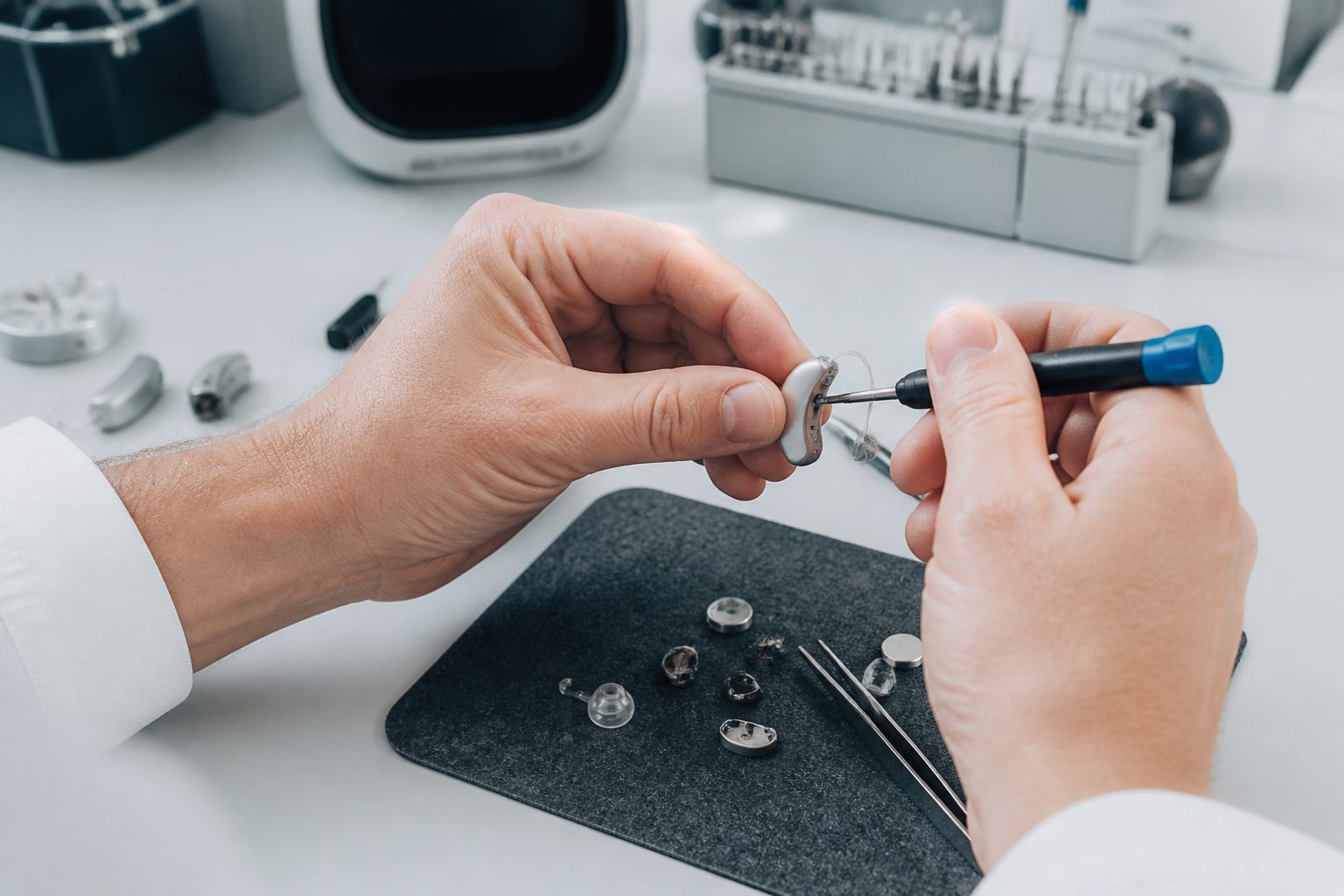
This guide is for patients and families in the UK, India, and Malaysia seeking reliable hearing aid repair, and wanting to understand the costs involved. Repair prices range from $40 to $250 (₹3,300-₹20,500; RM180-RM1,150) depending on the country, device type, and extent of repair.
We explain what’s included in typical repair fees, how to avoid hidden costs, and how to choose a reputable provider. Whether you have a basic behind-the-ear device or a complex digital aid, knowing what to expect can help you plan and save.
What is included in hearing aid repair costs
Hearing aid repair costs generally cover labour, replacement parts (such as microphones or receivers), and post-repair testing. Most clinics or service centres offer a basic diagnostic fee, which is sometimes deducted from the total repair cost if you proceed. More extensive repairs, such as replacing circuit boards or re-shelling, are charged separately. Some repairs may include cleaning and retubing, while others may be limited to a specific fault.
Warranty status plays a significant role: devices under warranty may be repaired free of charge or for a nominal fee. Out-of-warranty repairs are almost always chargeable. Some providers offer bundled service packages or annual maintenance contracts, which can offset the cost of multiple repairs over time.
Typical hearing aid repair costs in the UK, India, and Malaysia
The cost of repairing a hearing aid can vary significantly depending on the country, the complexity of the device, and the type of service provider you choose. In the UK, repairs carried out at independent clinics, manufacturer-authorised centres, or NHS-affiliated audiology departments typically range from $60 to $150 (£50–£125) for basic issues like microphone replacement, shell repairs, or minor electronic fixes. NHS patients may receive some repairs free of charge, but this is usually limited to devices issued by the NHS and excludes private purchases or advanced models.
In India, hearing aid repair costs are generally lower, with basic repairs costing between $40 and $100 (₹3,300–₹8,200). Prices can vary based on whether you visit a small independent shop, a hospital-based clinic, or a centre affiliated with a major manufacturer. Imported devices or those from less common brands may incur higher charges due to the need for special parts or expertise, and turnaround times may be longer if components are not readily available locally.
Malaysian clinics typically charge between $50 and $120 (RM230–RM550) for similar basic repairs. However, costs can escalate for advanced digital devices, especially those with wireless connectivity or proprietary software. In these cases, repairs may require specialised diagnostic equipment or parts that are only available through official channels, increasing both the price and the time required for service. Water damage, severe corrosion, or mainboard failure are among the most expensive issues to fix and can sometimes exceed the value of the device, making replacement a more cost-effective option.
Regardless of location, always ask for an itemised estimate before agreeing to any repair. This should include the cost of parts, labour, shipping, and any optional services. Comparing quotes from multiple providers can help you find the best value, but be wary of unusually low prices, as these may indicate the use of non-genuine parts or inexperienced technicians. Understanding the typical cost range in your country will help you make informed decisions and avoid overpaying for necessary repairs.
Comparing hearing aid repair costs: UK, India, Malaysia
| Country | Basic repair | Advanced repair | Diagnostic fee | Turnaround time |
|---|---|---|---|---|
| UK | $60-$150 (£50-£125) | $120-$250 (£100-£210) | $30-$60 (£25-£50) | 2-7 days |
| India | $40-$100 (₹3,300-₹8,200) | $80-$200 (₹6,600-₹16,500) | $10-$25 (₹800-₹2,000) | 1-5 days |
| Malaysia | $50-$120 (RM230-RM550) | $100-$220 (RM460-RM1,010) | $15-$40 (RM70-RM180) | 2-7 days |
Basic repairs include microphone, receiver or battery door replacement. Advanced repairs involve circuit boards, water damage, or major shell work. Diagnostic fees are typically applied if you do not proceed with the repair.
What is not included in the price
When budgeting for hearing aid repairs in the UK, India, or Malaysia, it’s important to understand what is typically excluded from the quoted repair price. Routine maintenance tasks such as battery replacement, cleaning, and basic device checks are generally not covered in standard repair fees unless your provider explicitly includes them as part of a service package. This means that even after paying for a repair, you may still need to purchase batteries or cleaning supplies separately, which can add to your ongoing expenses.
Another frequent exclusion is shipping or courier charges. If your hearing aid needs to be sent to a manufacturer, a specialist repair centre, or even overseas (which is sometimes necessary for high-end or imported devices), you may be responsible for both outbound and return shipping fees. These costs can be particularly significant in India and Malaysia, where local service centres may not always have the parts or expertise required for certain brands, necessitating international shipping. In the UK, while some NHS providers may cover shipping for eligible patients, private clinics often pass these costs on to the consumer.
Loaner devices, which can be crucial if you rely on your hearing aid daily, are not always included in the repair fee. Some clinics offer loaners for an additional charge, while others may not have them available at all. If your hearing aid is declared beyond repair, you might be offered a trade-in discount or a special price on a replacement device, but these offers are separate from the repair process and involve additional costs.
Accessories such as earmolds, domes, or tubing are also not included in repair prices. If these parts are worn or damaged, you will likely need to purchase replacements. Software or firmware upgrades, which can improve device performance or add features, are typically billed separately. Always ask your provider for a detailed breakdown of what is and is not included before authorising any repair work. This is especially important in countries like India and Malaysia, where service standards and inclusions can vary widely between providers.
Hidden costs and how to avoid them
Hearing aid repairs can sometimes come with unexpected or hidden costs that catch patients off guard. These can include expedited service fees if you need your device back quickly, handling or administration charges, and even return shipping costs—especially if your device has to be sent abroad for specialist attention. In some cases, clinics may replace non-essential parts, such as external casings or decorative covers, and add these to your bill without prior notice. This is particularly common with high-end models or imported brands, where parts availability may be limited and prices higher.
To avoid these hidden expenses, always request a comprehensive written quote before agreeing to any repair. The quote should clearly itemise the cost of labour, each part to be replaced, any optional services (such as cleaning or expedited repair), and all potential surcharges. Ask the provider to specify which charges are mandatory and which are optional, so you can make an informed decision. In the UK, reputable providers are generally transparent about costs, but in India and Malaysia, practices can vary, and written documentation is especially important for clarity and future reference.
Another key step is to clarify warranty coverage. Some repairs may be covered under the original device warranty or an extended service plan, but only if you use authorised service centres. Also, ask if the repair itself and any replaced parts come with a guarantee—some clinics offer a 30- to 90-day warranty on their work, which can protect you from repeat issues and additional costs.
If you are using insurance or public healthcare, check the terms carefully. In the UK, NHS patients may have some repairs covered, but private insurance policies often have specific provider networks or require pre-authorisation. In India and Malaysia, insurance coverage for hearing aid repairs is less common, and public healthcare support may be limited to government hospitals. For imported or less common brands, parts may be more expensive and take longer to source, leading to higher costs and longer wait times. When possible, choose widely supported brands and local service centres to minimise these risks.
How to save on reliable hearing aid repair
Routine cleaning and careful handling can help reduce the frequency and cost of repairs. Many clinics offer free or discounted diagnostic checks—take advantage of these to identify issues early. If your device is out of warranty, compare quotes from both manufacturer-authorised and independent repair centres. While independent clinics may offer lower prices, ensure they use genuine parts and provide a warranty on their work.
Some countries, especially India, offer bundled service packages or annual maintenance contracts that cover multiple repairs for a fixed fee. If you rely on your hearing aid daily, this can be cost-effective. In Malaysia and the UK, some providers offer discounts for students, pensioners, or bulk repairs (for those with bilateral devices).
Choosing a reputable hearing aid repair provider
Selecting a trustworthy hearing aid repair provider is crucial to ensure quality workmanship and protect your investment. In the UK, look for clinics or audiology centres with certified audiologists and technicians. Membership in the British Society of Hearing Aid Audiologists (BSHAA) or registration with the Health and Care Professions Council (HCPC) are strong indicators of professional standards. These credentials mean the provider adheres to ethical guidelines and ongoing professional development, which is particularly important for complex repairs or high-value hearing aids.
In India, reputable centres are often affiliated with the Rehabilitation Council of India (RCI) or operate within established hospital audiology departments. These organisations ensure that staff are properly trained and use appropriate diagnostic and repair equipment. Given the wide range of providers in India, from small independent shops to large hospital-based clinics, checking for RCI affiliation and seeking recommendations from local patient groups can help you avoid unqualified or inexperienced technicians.
In Malaysia, look for clinics accredited by the Ministry of Health or those partnered with international hearing aid manufacturers. These clinics are more likely to have access to genuine parts and the latest diagnostic tools, which is particularly important for digital or wireless-enabled devices. Internationally branded service centres may also offer faster turnaround times and better guarantees, especially for imported hearing aids.
Wherever you are, avoid providers who cannot or will not provide a clear written estimate before starting work. Ask if they use genuine manufacturer parts and if their technicians have specific experience with your hearing aid brand and model. Non-genuine parts can compromise device performance and may void any remaining warranty. Reading online reviews and seeking word-of-mouth recommendations from local hearing loss support groups or community forums can also help you identify reliable providers with a track record of customer satisfaction.
Planning your repair: practical tips
Proper planning can make the hearing aid repair process smoother, minimise downtime, and help you avoid unnecessary costs. Before handing over your device, back up any programmable settings if possible—many modern hearing aids allow settings to be stored on a smartphone app or with your audiologist. Keep a detailed record of your device’s model, serial number, and purchase or warranty status. This information will be essential if you need to check warranty eligibility or if your device is lost during transit or repair.
If your hearing aid is still under warranty, always contact the original seller or manufacturer first. Authorised repairs are usually required to maintain warranty coverage, and unauthorised work can void any remaining protection. In the UK, NHS patients should return devices to their issuing clinic, while in India and Malaysia, check with your original provider or the device manufacturer’s local representative for approved service centres.
Ask the repair provider about the expected turnaround time, especially if you rely on your hearing aid for work, school, or social activities. Some repairs may take only a few days, while others—especially those requiring imported parts or manufacturer intervention—can take weeks. If you need a loaner device, request one in advance, as availability is often limited and may incur additional fees, particularly in India and Malaysia.
For those who travel frequently or are planning an extended trip, it’s wise to check if your hearing aid brand has authorised service centres in your destination country. This can prevent delays or compatibility issues if repairs are needed while abroad. When you collect your repaired device, ask for a detailed invoice listing all work performed and parts replaced. This documentation is important for insurance claims, tax deductions, or future reference if the same problem recurs.
Frequently asked questions
How do I know if my hearing aid needs professional repair or just cleaning?
If your device has stopped working, emits distorted sound, or shows visible damage, you likely need professional repair. Regular cleaning can address minor issues like wax buildup, but persistent problems should be checked by a technician.
Are repairs covered under warranty in the UK, India, and Malaysia?
Most hearing aids come with a 1-2 year manufacturer warranty covering defects and some repairs. Out-of-warranty repairs are usually chargeable. Always check your warranty documents before arranging repairs.
Can I repair my hearing aid myself to save money?
Basic maintenance like battery changes or cleaning can be done at home, but attempting internal repairs risks permanent damage and voids warranties. Professional repair is recommended for technical faults or component failure.
How long does a typical repair take?
Most repairs are completed within 2-7 days, depending on part availability and clinic workload. Complex repairs or those requiring manufacturer intervention may take longer, especially for imported devices.
What should I do if my hearing aid is declared beyond repair?
If your device cannot be repaired, ask about trade-in discounts or replacement options. Some clinics offer credit towards a new device if you surrender the old one. Always request an explanation and a written report for insurance claims.
Related guides
Disclaimer: Prices above are indicative and can vary by device model, repair complexity, and provider. Always request a written quote and consult a qualified audiologist or ENT specialist before proceeding with repairs.