
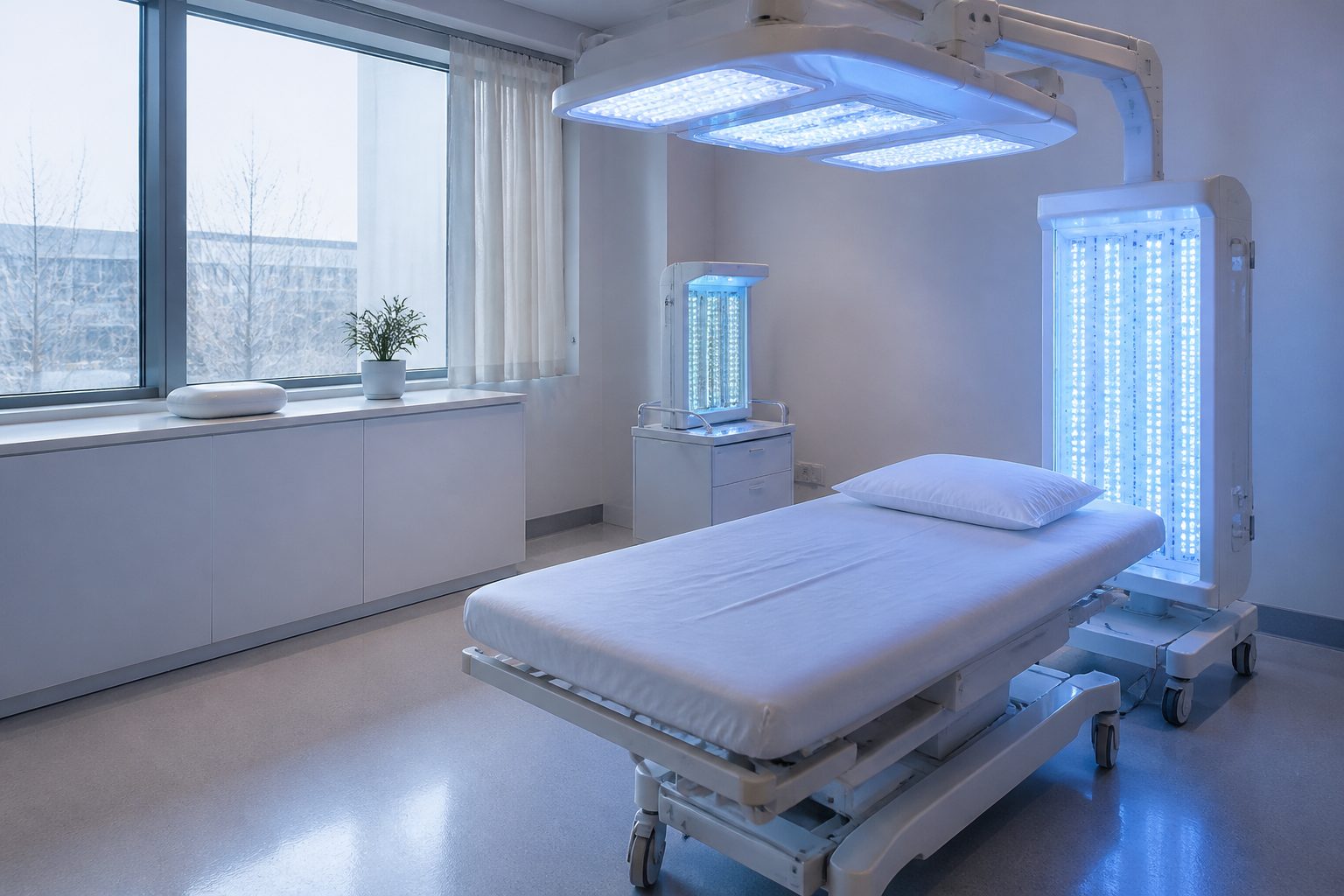
Psoriasis phototherapy is a common and effective treatment option for patients with moderate to severe psoriasis who have not responded well to creams or ointments. If you are comparing treatment options in India, the UK, or Singapore, you will find significant differences in cost, inclusions, and treatment standards.
The typical cost for a full course of phototherapy (usually 20–30 sessions) ranges from $250–$900 in India, $1,400–$3,800 in the UK, and $1,000–$2,200 in Singapore. The price depends on the clinic, the specific type of phototherapy used, and what is included in the package.
What is psoriasis phototherapy?
Phototherapy uses controlled exposure to ultraviolet (UV) light to reduce inflammation and slow down the rapid skin cell turnover seen in psoriasis. The most common types are narrowband UVB, broadband UVB, and PUVA (psoralen plus UVA). Treatment is usually given in a hospital or clinic setting, two to three times per week, over several weeks. Phototherapy is considered when topical treatments are insufficient or unsuitable.
Sessions are short (5–20 minutes), but the full course can require 20–30 visits. The goal is to clear or significantly improve skin lesions. Phototherapy is not a cure, but it can provide months of remission. Side effects are generally mild but can include temporary redness, itching, or dryness. Long-term risks include increased skin aging and, rarely, skin cancer, especially with PUVA.
Cost comparison: India, UK, and Singapore
The total cost of psoriasis phototherapy varies widely by country, clinic, and protocol:
| Country | Total cost (20–30 sessions) | Cost per session | What’s included |
|---|---|---|---|
| India | $250–$900 (₹21,000–₹75,000) | $12–$35 | Consultation, phototherapy, basic skin monitoring |
| UK | $1,400–$3,800 (£1,100–£3,000) | $70–$150 | Consultation, phototherapy, nurse supervision, basic labs |
| Singapore | $1,000–$2,200 (SGD 1,350–3,000) | $50–$100 | Consultation, phototherapy, nurse supervision |
These costs are for private clinics and hospitals. Public sector treatment may be less expensive or even free in the UK if you qualify for NHS treatment, but waiting times are long and eligibility may be restricted for non-residents.
What is included in the price?
The pricing structure for psoriasis phototherapy can be complex, and what is included in the quoted cost varies not only by country but also by individual clinic. Most clinics—whether in India, the UK, or Singapore—will include the initial dermatology consultation, all scheduled phototherapy sessions, and basic monitoring by a nurse or dermatologist as part of their standard package. This typically covers assessment of your skin’s response, dose adjustments, and routine safety checks during treatment.
Pre-treatment blood tests, especially for PUVA therapy, may or may not be included. In India, these are often charged separately, while some higher-end clinics in Singapore and the UK may bundle them into the initial package. However, if you require additional or repeat blood tests due to side effects or pre-existing health conditions, these are almost always billed extra, regardless of location.
Medications such as topical steroids, vitamin D analogues, or emollients are usually not included in the phototherapy package. These can represent a significant ongoing cost, especially if you require branded or imported products, which are more expensive in Singapore and the UK. In India, generic options are more widely available and affordable, but quality can vary.
Follow-up visits beyond the initial assessment—such as mid-course reviews, management of side effects, or post-treatment consultations—are frequently charged separately. Some clinics offer discounted package rates for a full course (e.g., 20–30 sessions), while others bill strictly per session, which can make budgeting challenging if extra sessions are needed.
If you are traveling for treatment, you must also consider non-medical expenses: accommodation, local transportation, meals, and, for international patients, visa fees and travel insurance. These can significantly increase the overall cost, particularly in cities like Singapore and London, where living expenses are high.
To avoid misunderstandings, always request a detailed, written quote outlining exactly what is included and excluded. Clarify the clinic’s policy on missed or rescheduled sessions, and ask about the cost of any potential additional services. This transparency will help you plan your finances and avoid unexpected bills.
Hidden costs and exclusions
When budgeting for psoriasis phototherapy, it is crucial to recognize that the advertised price rarely covers every aspect of care. Many clinics, regardless of country, list their lowest per-session or package rates, but a range of additional expenses may arise during your treatment journey.
- Pre-treatment blood tests: Especially for PUVA (psoralen plus UVA) therapy, you may need liver and kidney function tests before starting and periodically during treatment. In India, these are often charged separately and can vary by laboratory. In the UK and Singapore, private clinics may bundle some tests, but others may be referred to external labs, increasing costs.
- Topical medications or moisturisers: Even if phototherapy is the mainstay, most dermatologists recommend ongoing use of prescription creams or emollients. These are seldom included in the phototherapy package and can become a significant recurring expense, particularly for imported or branded products in Singapore and the UK.
- Additional consultations: The initial assessment is usually included, but follow-up visits—especially if you experience side effects or require treatment adjustments—are often billed separately. In the UK and Singapore, these follow-ups may be mandatory for dose monitoring and safety, adding to overall costs.
- Repeat or extended courses: Psoriasis is a chronic condition, and some patients need more sessions than originally planned. Most clinics charge extra for sessions beyond the basic package, and these add up quickly in higher-cost countries like Singapore and the UK.
- Travel and accommodation: For international patients, or those living far from major cities, travel expenses can be substantial. In India, patients often travel from rural areas to urban centers for care, while in Singapore and the UK, accommodation near specialist clinics can be costly. These costs are never included in medical quotes.
Another factor to consider is the referral process. In the UK and Singapore, private clinics frequently require a referral letter from a general practitioner (GP), which may involve a separate appointment fee and waiting time. This step is usually not needed in India, where self-referral is common and can expedite access but may mean less coordinated care.
To avoid surprises, always request a comprehensive breakdown of all likely costs before committing to treatment. Clarify which services are included, which are optional, and what might be required if your clinical situation changes during therapy.
How to save safely on phototherapy costs
To reduce costs without compromising safety, consider these strategies:
- Choose a reputable clinic with experienced dermatologists and properly maintained equipment. This reduces the risk of burns or ineffective treatment.
- Look for package deals for a full course, rather than paying per session.
- If you are in the UK and eligible for NHS care, ask your GP for a referral to a hospital dermatology department. This can be free but may involve long waits.
- In India, compare quotes from several major dermatology hospitals in cities like Delhi, Mumbai, or Bangalore. Prices can vary by 30–50%.
- Ask about off-peak rates or discounts for paying upfront.
- For those living abroad, consider the costs of travel, accommodation, and multiple clinic visits before deciding to travel for treatment.
Do not attempt home phototherapy without medical supervision. Home units are available in some countries, but should only be used with a prescription and regular follow-up by a dermatologist.
What drives the price of phototherapy?
Several factors affect the overall cost:
- Type of phototherapy: Narrowband UVB is the most common and usually less expensive than PUVA, which requires additional medication and monitoring.
- Number of sessions: More severe or extensive psoriasis may need more sessions, increasing cost.
- Clinic location and reputation: Major metropolitan hospitals and clinics with international accreditations (such as JCI or NABH in India) may charge more.
- Staffing and supervision: Clinics with dedicated dermatology nurses and on-site doctors may have higher fees but offer safer care.
- Package vs. per-session billing: Some clinics offer discounts for booking a full course upfront.
- Additional services: Pre-treatment screening, laboratory tests, and follow-up care may be bundled or charged separately.
Always clarify what is included before starting treatment, and ask for a breakdown of possible additional expenses.
How to choose a dermatology clinic
Selecting the right clinic for psoriasis phototherapy is a crucial step that can influence both your treatment outcomes and overall experience. Begin by evaluating the experience and credentials of the medical team. Look for board-certified dermatologists with specific expertise in managing psoriasis, as well as clinics with a strong track record and positive patient outcomes. In India, check for registration with the Medical Council of India; in Singapore, look for Singapore Medical Council certification; and in the UK, General Medical Council registration is essential.
Assess the quality of equipment. Modern, well-maintained phototherapy units that are regularly calibrated ensure both safety and efficacy. Ask about the age and type of equipment—narrowband UVB units are the gold standard for psoriasis—and whether the clinic follows international safety protocols.
Consider international accreditation. Reputable clinics often hold certifications such as JCI (Joint Commission International), NABH (National Accreditation Board for Hospitals & Healthcare Providers) in India, or equivalent standards in the UK and Singapore. These accreditations reflect adherence to stringent quality and safety benchmarks.
For overseas patients, patient support services are vital. Look for clinics that offer international patient coordinators, assistance with travel logistics, language interpretation, and clear, transparent billing. This is especially important in Singapore and the UK, where medical tourism is common and processes can be complex.
The location of the clinic matters, as phototherapy typically requires multiple weekly visits. Choose a clinic that is easily accessible from your accommodation or place of work. In large cities like Mumbai, London, or Singapore, proximity can save both time and money on transportation.
Finally, review patient testimonials and independent reviews on trusted platforms. These can provide valuable insights into the clinic’s reputation, quality of care, and patient satisfaction. Don’t hesitate to reach out to former patients if possible, or seek recommendations from local psoriasis support groups.
Before starting, always request a detailed written treatment plan and cost estimate. If you are considering treatment abroad, arrange a virtual or in-person consultation to discuss your case, ask questions about the process, and clarify any concerns. This due diligence will help you choose a clinic that meets your needs and expectations, ensuring a smoother, more positive treatment journey.
Planning your treatment: Practical tips for international patients
If you are traveling to another country for phototherapy, careful planning is essential. Consider the following:
- Duration: A typical course requires 2–3 visits per week for 6–10 weeks. Plan your stay accordingly.
- Visa requirements: Check if you need a medical visa for your destination country.
- Accommodation: Choose lodging close to the clinic to reduce commute times.
- Language: Ensure the clinic staff speak your language or provide interpreters.
- Follow-up care: Arrange for follow-up with a dermatologist at home for ongoing monitoring.
- Health records: Bring previous treatment records, photos, and a summary of your medical history.
- Travel insurance: Make sure your insurance covers medical care abroad, or purchase a suitable plan.
Some clinics offer bundled packages for international patients, including airport transfers and accommodation. Ask about these when seeking quotes.
What to expect during and after phototherapy
Phototherapy for psoriasis is a structured, clinic-based process that typically involves multiple sessions over several weeks. Each session usually takes place in a dedicated phototherapy booth, where you may be asked to stand or sit, depending on the equipment and the areas of your body being treated. You will be required to wear protective eyewear to shield your eyes from ultraviolet light. For PUVA therapy, sunscreen is applied to unaffected skin to minimize unnecessary exposure, and you may need to ingest or soak in psoralen beforehand, which increases your skin’s sensitivity to UVA light.
Sessions are generally brief, lasting from 5 to 20 minutes, and are scheduled two to three times per week. The exact protocol varies by country and clinic. In India, sessions might be more flexible to accommodate patient schedules, while in Singapore and the UK, clinics often adhere to strict timing and safety protocols. After each session, you can typically resume your normal activities immediately, as there is no downtime required. Mild side effects such as redness, itching, or a sensation similar to mild sunburn are common, but these usually resolve quickly. It is important to attend all scheduled sessions, as consistency is key to achieving optimal results.
After completing a full course—usually 20 to 30 sessions—many patients notice significant improvement in their skin, with reduced scaling, redness, and discomfort. Remission periods can last for several months, but because psoriasis is a chronic condition, flare-ups may recur, and repeat courses of phototherapy could be necessary. During remission, you should continue using prescribed moisturisers and any other recommended topical treatments to maintain results. It is also important to monitor your skin for any new or worsening symptoms and report these promptly to your dermatologist, as adjustments in therapy or further investigations may be needed.
In all countries, clinics provide education on aftercare and sun protection, as well as guidance on when to seek medical advice. Some clinics, especially in Singapore and the UK, offer follow-up support through phone or virtual consultations, ensuring ongoing care even after the initial course is complete.
The bottom line
Ultimately, phototherapy is regarded as one of the safest and most effective treatments for moderate to severe psoriasis, offering good value for many patients. However, the total cost can vary dramatically depending on where you seek care and how your treatment is structured. In India, private clinics typically offer the lowest per-session and package rates, making it an attractive destination for both local and international patients seeking affordable care. However, patients should be mindful of potential variability in quality and the need to budget for additional expenses such as medications and follow-up tests.
In contrast, Singapore and the UK are known for their high standards of care, modern facilities, and additional patient amenities—such as shorter waiting times, multilingual staff, and more comprehensive aftercare. These benefits, however, come with higher price tags. For example, Singapore’s efficient healthcare infrastructure and international reputation make it a popular choice for medical tourists, but accommodation and living costs can be significant. The UK’s private clinics provide similar advantages, but also require patients to navigate referral systems and potentially longer lead times for appointments.
Regardless of location, it is essential to compare clinics carefully—not just on headline price, but on what is included, the experience of the clinical team, and the quality of equipment. Ask for written quotes detailing all possible charges, and plan your finances and travel well in advance. For international patients, research visa requirements, local accommodation, and transport options before booking treatment.
For many, the best value is found by balancing cost, safety, and convenience—sometimes by looking beyond your home country, but always by being a well-informed patient. Take time to research, ask questions, and ensure you understand the full scope of your investment in phototherapy.
Frequently asked questions
How many phototherapy sessions are needed for psoriasis?
Most patients require 20–30 sessions, delivered two or three times per week. The exact number depends on psoriasis severity, skin type, and response to treatment. Your dermatologist will monitor progress and decide when to stop or adjust therapy.
Is phototherapy available in public hospitals?
Yes, phototherapy is available in public hospitals in India, the UK, and Singapore. In the UK, NHS treatment is free for residents but may have long waits. In Singapore and India, public sector options are available but often less convenient for international patients.
Are there risks or side effects?
Phototherapy is generally safe under medical supervision. Side effects include temporary redness, dryness, and itching. Long-term risks (especially with PUVA) include increased skin aging and a slightly higher risk of skin cancer. Regular monitoring by a dermatologist helps minimise risks.
Can I do phototherapy at home?
Home phototherapy units exist but should only be used under a dermatologist’s supervision. Incorrect use can lead to burns or ineffective treatment. Home units may not be widely available in all countries and are usually more expensive upfront.
What happens if I miss a session?
Missing a session may reduce the effectiveness of treatment, as regular exposure is important. If you miss a session, inform your clinic and reschedule as soon as possible. A few missed sessions can be made up, but frequent gaps may require restarting the course.
Related guides
Disclaimer: Prices are indicative and vary by individual case, clinic, and exchange rates. Always request a written quote and consult a qualified dermatologist before starting any treatment.